Decanting wine is more than an old winemaking tradition; it is an art that can significantly improve the taste and the overall experience of drinking wine. This guide summarises the key information and tips for anyone who wants to deepen their knowledge of decanting and raise the quality of their wine.
What is decanting wine?
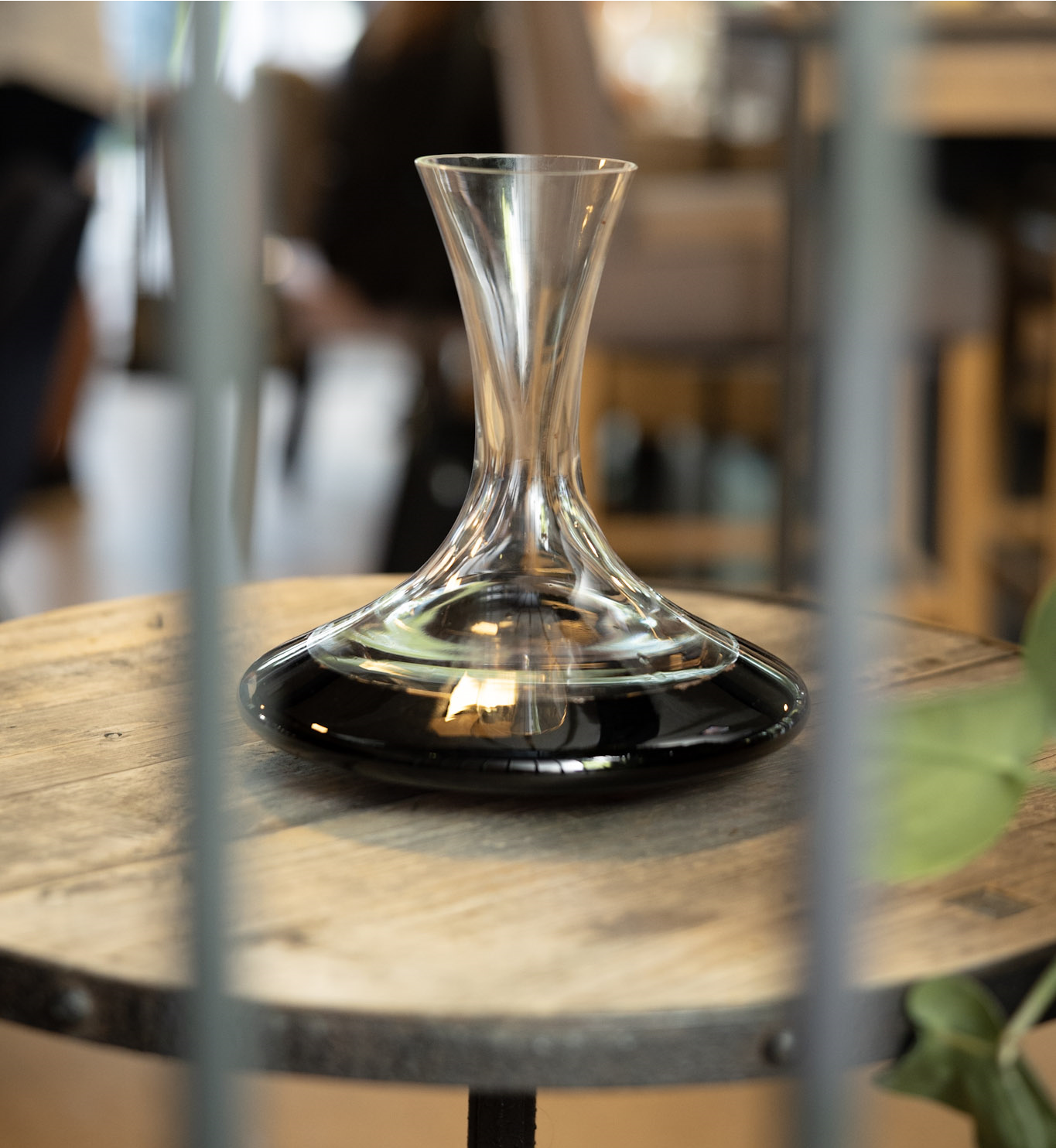
Decanting is the gradual pouring of a liquid from one vessel into another. When you decant wine, you usually pour it from the original bottle into a glass serving vessel, such as a decanter or a carafe.
There are two reasons to do it:
- To separate the wine from sediment that has formed at the bottom of the bottle (especially in older red wines). Sediment is a completely natural part of unfiltered wine, or it forms during ageing in the bottle, when tannins bind with the natural red pigments. This deposit is entirely harmless, but it does look rather unappealing in the glass.
- To aerate, or let the wine breathe, so that its flavour and aroma come forward. Longer contact with oxygen can open up a range of aromatic compounds and soften the wine.
When should you decant wine?
As a general rule, wines older than 5 to 10 years should be decanted. Most red wines older than 5 years begin to form sediment, so decanting is needed to separate the wine from it. Almost all wines (red and white) older than 20 years also accumulate sediment, but they are also more reactive to air. In this case, decanting into a small vessel removes the sediment and lets you control the aeration.
Young, high-quality wines (red and white) need decanting, especially if they contain a high amount of tannins. This applies above all to red Bordeaux wines, for example from Pauillac or Saint-Estèphe, where younger vintages tend to be firm and initially closed. Aerating wine opens up complex flavours and aromas. Decant any wine whose taste you do not like. A wine that is unbalanced, too acidic or has a vinegary smell may open up and soften in a decanter. Decant natural wines, including whites and rosés, because they are more prone to acidity and reduction with age.
How to decant wine properly
Stand the bottle you plan to decant upright for a full 24 hours beforehand, so that the sediment settles at the bottom. Alongside the bottle, prepare a decanter, a candle and a glass. On the day of decanting red wine, proceed as follows:
- Prepare a lit candle or a torch to place by the decanter.
- Open the bottle and clean the neck so that you can see inside. If the cork broke when opening and there are small pieces in the wine, use a strainer or a filter funnel when pouring into the decanter.
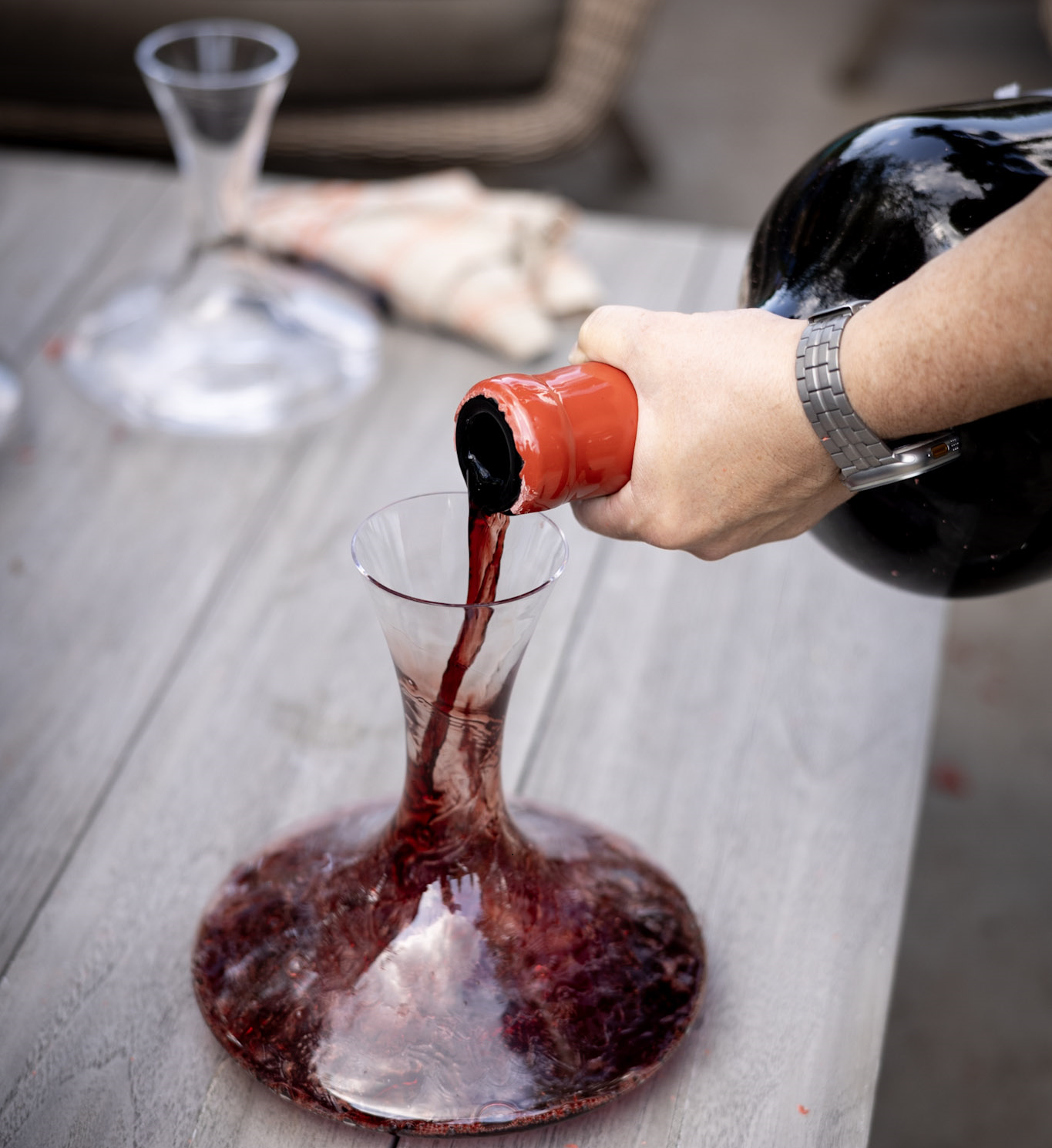
- Pour the wine slowly down the side of the decanter. Hold the neck of the bottle over the candle so that you can see whether any sediment is flowing into the decanter. The candle must be at least 15 cm from the bottle, otherwise the wine may warm up. Once the bottle is about half empty, slow your pouring even further (this lowers the chance of sediment spilling into the decanter). Stop pouring as soon as you see sediment in the neck of the bottle. At that point you will probably have about 30 ml of wine left in the bottle. Sediment can look like lumps, grains or flakes. Sometimes the wine simply looks cloudy instead of showing particles.
- Once the wine is in the decanter, pick it up and swirl it gently. The wine opens up and its aromas and flavours come together.
How long should you decant wine?
Most wines benefit from about 30 minutes of decanting. The most important factor is your personal taste preference. The longer the wine breathes, the softer its tannins become (resulting in a smooth, complex flavour). Taste your wine every 20 to 30 minutes and serve it once it reaches the taste you prefer. Decant old, fragile wines just before serving. They have already aged enough in the bottle, so too much exposure to oxygen could change their character.
Ordinary white wines and rosés do not need decanting; simply swirl the wine in the glass for a few seconds before drinking. High-quality white wines benefit from decanting the most. Champagne and sparkling wines lose some of their fizz when decanted, so decant them only if you want more flavour and fewer bubbles. Light red wines such as Pinot Noir do not need long in a decanter. Full-bodied red wines, especially young ones, should be decanted for 20 minutes to an hour. Young, structured wines from Bordeaux's left bank may appreciate slightly longer aeration.
How to decant large-format bottles
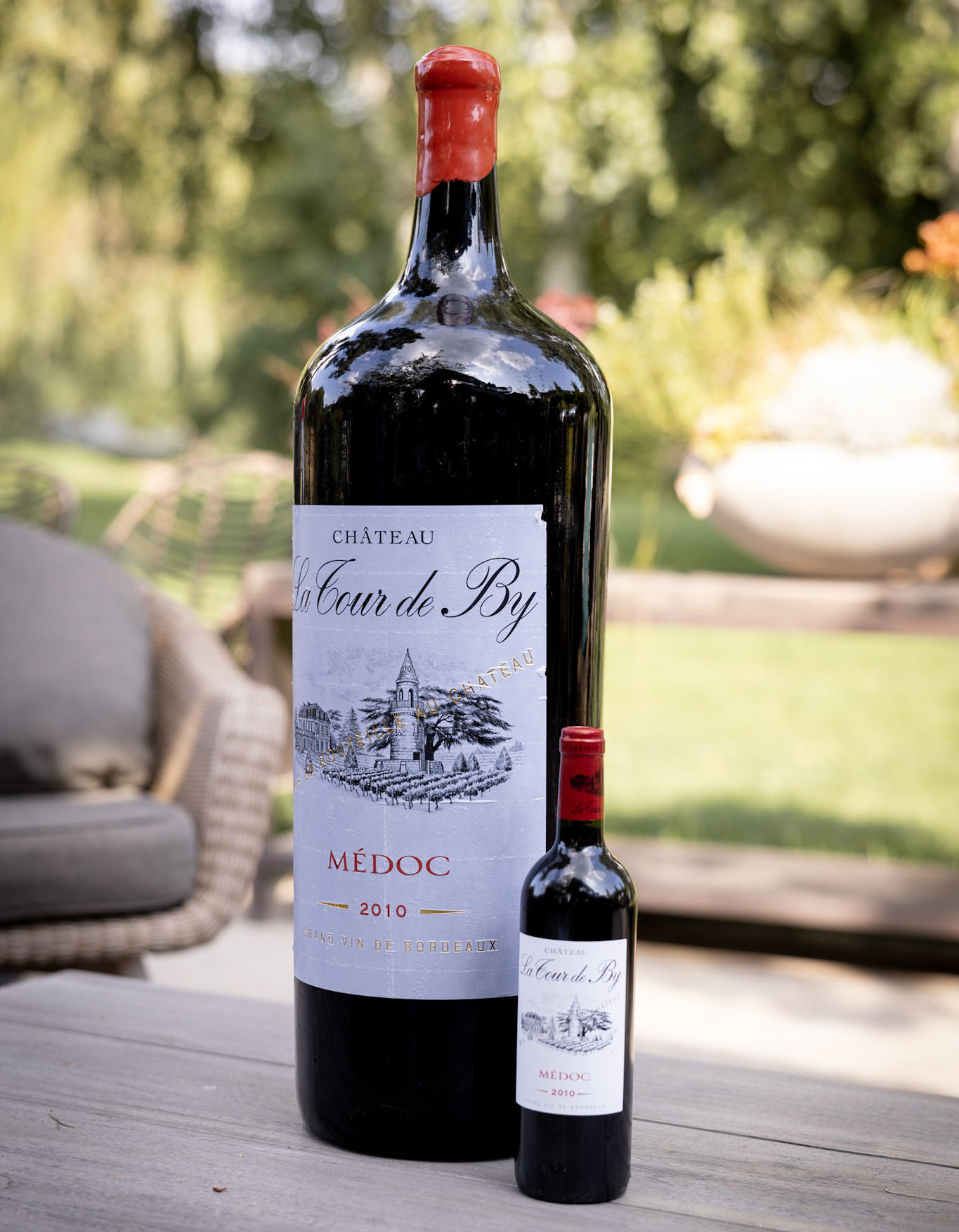
Decanting a standard 750 ml bottle or even a Magnum (1.5 l) is fairly simple, but what if you have a large-format bottle such as a Double Magnum (3 l) or larger? Should you use several decanters? Or can you use one decanter and refill it after pouring the wine into glasses?
Expert sommeliers advise not interrupting the process when decanting older wines, as this could stir up the sediment and defeat the purpose of decanting. Master Sommelier Evan Goldstein shared his tips:
Prepare several decanters in advance; how many you need depends on the size of the bottle and the size of the decanters available. (Decanters are usually single-bottle or magnum size.) The decanting process should be continuous. Once you begin, do not stop until it is finished, because the sediment in the wine would be stirred up. Arrange for someone to swap the decanters for you. If the bottle is larger than a Jeroboam (4.5 l), you will probably need a second person to help keep the bottle steady during decanting.